
OMSKABELSER -FRA MØRKET SØLV / RE-CREATIONS - FROM THE DARKNESS SILVER
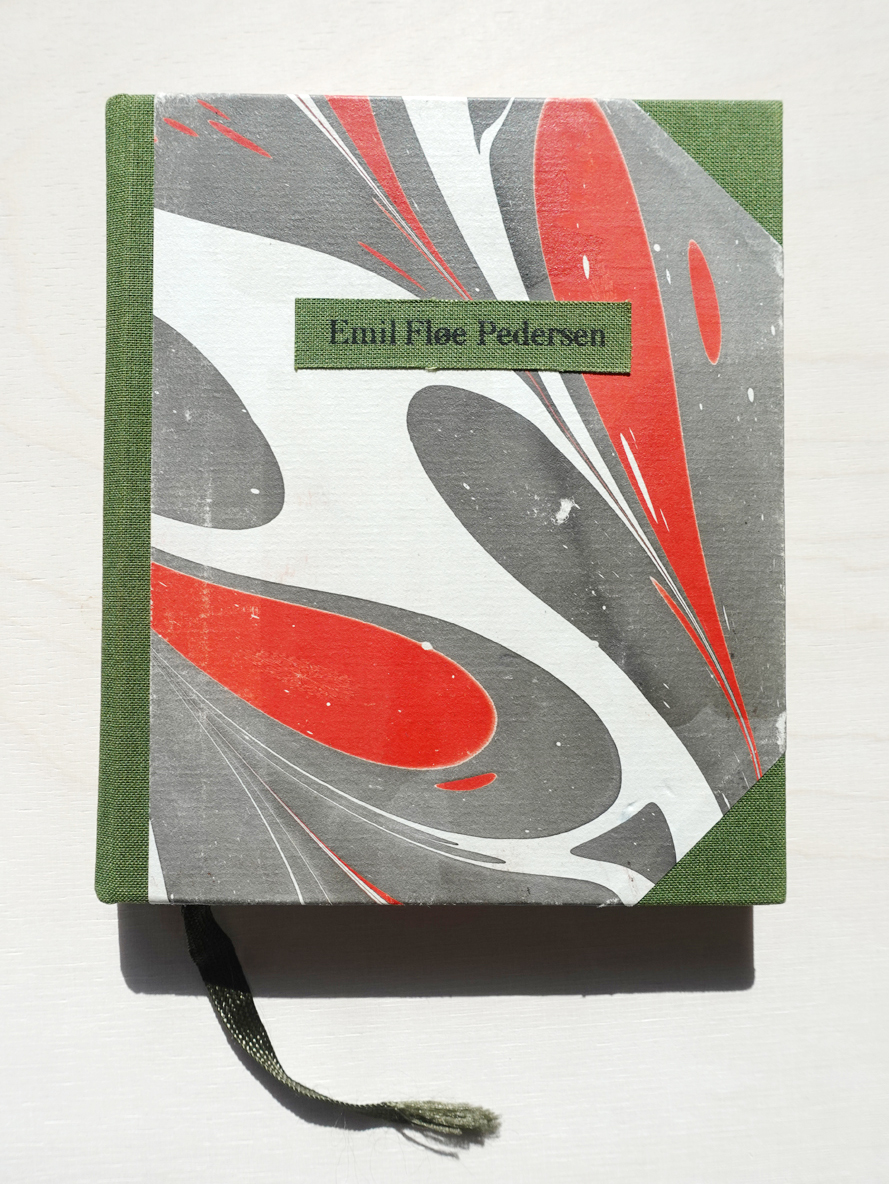
Artist book
22x28 cm
Published by ARK-mappen
2025
ARK 147 [2025:2]
Lotte Fløe Christensen and the silverfish: [Omskabelser - fra mørket sølv]
Text from ‘Dødsbo’ / ‘Estate’ by Inger Smærup Sørensen
Printed by Actum, Copenhagen, on 150 g. Munken White
Editors, ARK-mappen: Steen Hammershøy Andersen, Lars Kiel Bertelsen, Klaus Marthinus og Iben West.
Edition: 400
Lotte Fløe Christensen and the silverfish: [Omskabelser - fra mørket sølv]
Text from ‘Dødsbo’ / ‘Estate’ by Inger Smærup Sørensen
Printed by Actum, Copenhagen, on 150 g. Munken White
Editors, ARK-mappen: Steen Hammershøy Andersen, Lars Kiel Bertelsen, Klaus Marthinus og Iben West.
Edition: 400


For a long time, I was frustrated with the silverfish eating my books, photographs and personal documents, but at some point, my perspective shifted. I saw them no longer as a nuisance, but as remarkable creatures worthy of my respect. Silverfish have existed for more than 300 million years and in a time perspective we humans are nothing compared to them. The silverfish are indifferent to my impulse to collect and preserve; they simply consume and create beautiful works at the same time.


 Among the 10 best artist books of 2025. List by Maria Kjær Themsen, Information
THE TOUCH
2022
Photographic series
74x92 cm, pigment prints on Hahnemuhle


Soil Studies – New Danish Photography of Nature is an exhibition about ‘soil’ as concrete, physical material, and as the basis of belonging and identity. The exhibition brings together the works of five Danish art photographers and reaches beyond Danish soil into the Greenlandic and Icelandic landscapes: rock, sea, botany and the human body meet in very experimental and spatial works. The selection of works places emphasis on the paradoxical relationship between humans and nature, in which we simultaneously turn to nature to feel small and to feel connected to a system much larger than ourselves – and all the while, we are increasingly becoming aware that we as a species excerpt immense control over this same global ecosystem. How do we connect intellectually, emotionally and pragmatically to nature at this point in time? To what extent is our conception of nature a construction?
The artists of the exhibition each had their own approach to working with the theme but they share an interest in using the image-creating process itself as a source of knowledge and to express personal experience, and they testify to both cultural, scientific and emotional meanings of the earth beneath our
feet.
Artists: Ditte Knus Tønnesen, Lotte Fløe Christensen, Veronika Geiger, Inuuteq Storch, Kirstine Autzen.
Curated by Beate Cegielska and Kirstine Autzen.
The artists of the exhibition each had their own approach to working with the theme but they share an interest in using the image-creating process itself as a source of knowledge and to express personal experience, and they testify to both cultural, scientific and emotional meanings of the earth beneath our
feet.
Artists: Ditte Knus Tønnesen, Lotte Fløe Christensen, Veronika Geiger, Inuuteq Storch, Kirstine Autzen.
Curated by Beate Cegielska and Kirstine Autzen.


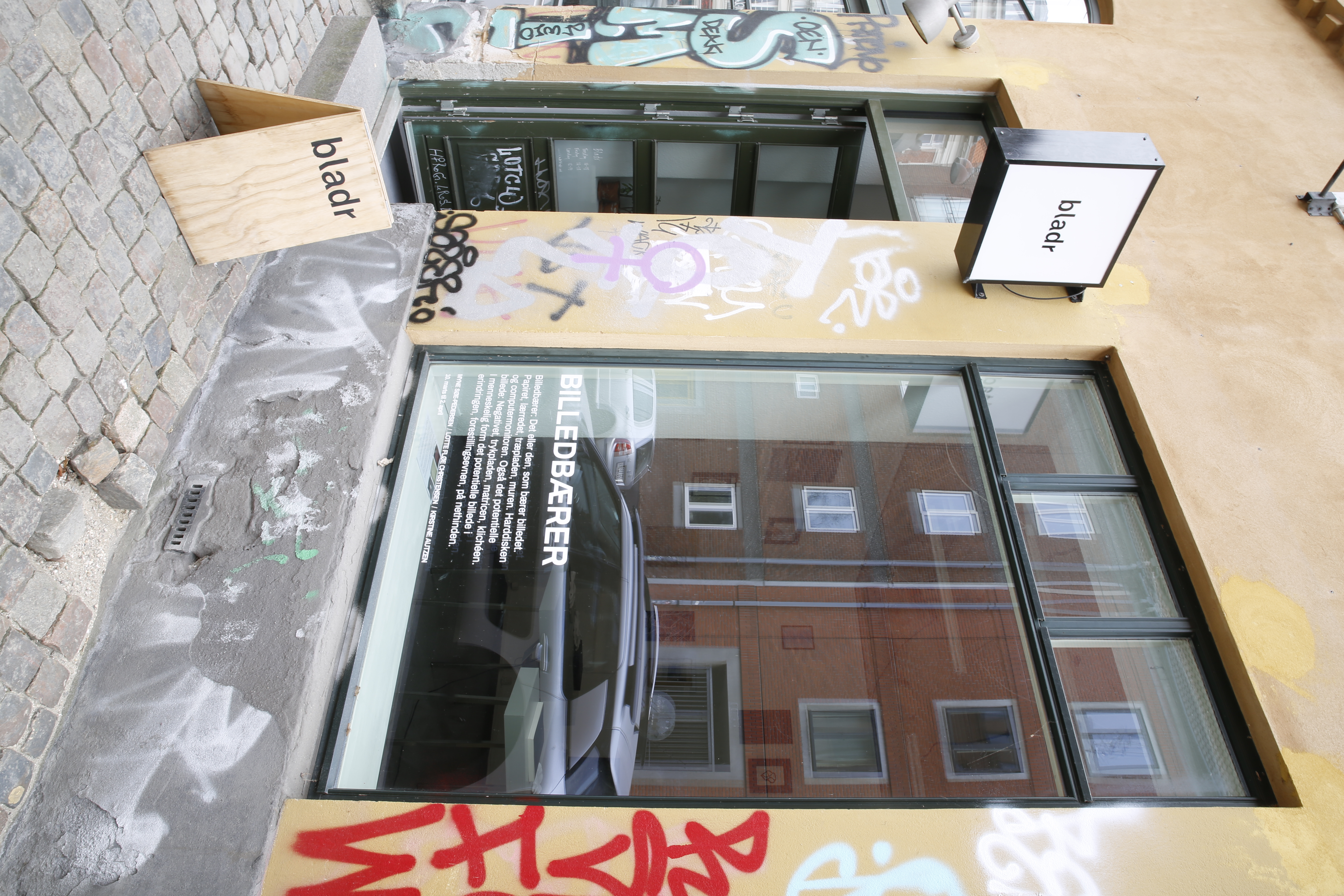
IMAGE CARRIER / BILLEDBÆRER
Exhibition
Myne Søe-Pedersen / Lotte Fløe Christensen / Kirstine Autzen
Bladr, Copenhagen
10. March – 2. april 2022
About the exhibition
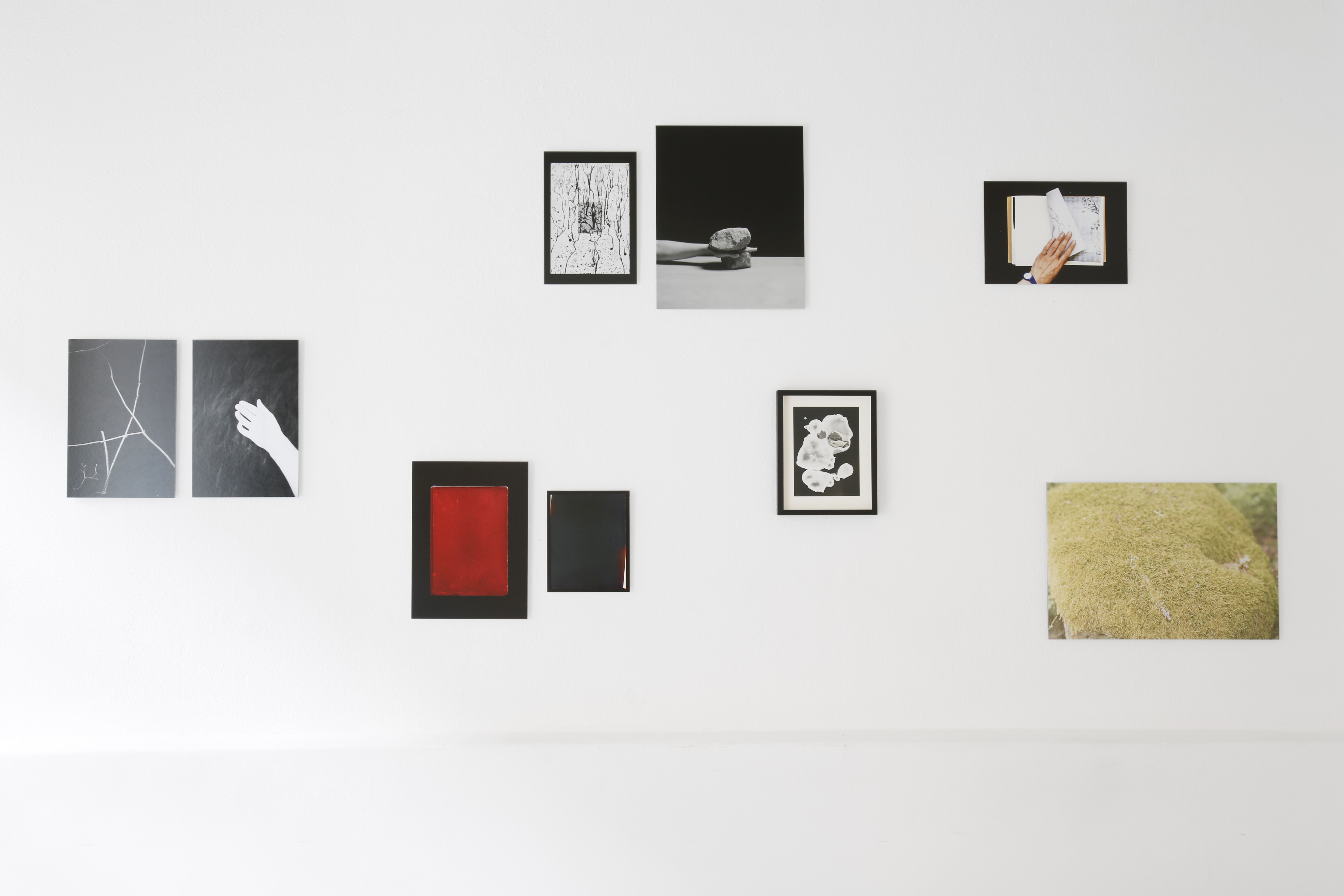
Three artists with a background in photography have placed photographs from their individual archives into a new, shared archive. Based on these images, they explore how new connections can emerge when the collective takes over from the individual and the boundaries between practices dissolve.
The exhibition title “Image Carrier” is borrowed from the image-making process itself. The image carrier is that which—or the one who—carries the image. Physically, this could be the paper, canvas, wooden panel, or wall. The hard drive and the computer monitor. But also the potential image: the negative, the printing plate, the matrix, the cliché. In human form, the potential image exists in memory, imagination, on the retina—just as we carry images on our skin and in our clothing.
We are all image carriers. We carry images around on our mobile phones. We hang old pictures on new walls when we move. In a supermarket shopping bag, the packaging is filled with images. And we carry images that lie deeper within us—dream images, memories, visions that haunt us. Images we may not fully understand, or that take on new meaning again and again throughout life.
The exhibition Image Carrier explores the ability of images to move from one context to another—between people, between archives and media—and to enter into new meanings. Through video, wall-based works, and four very special books, the three artists examine the flexibility of images.
The exhibition has been created specifically for the exhibition space Bladr, a specialist bookstore and platform for artist books on Griffenfeldsgade in Copenhagen.
Three artists with a background in photography have placed photographs from their individual archives into a new, shared archive. Based on these images, they explore how new connections can emerge when the collective takes over from the individual and the boundaries between practices dissolve.
The exhibition title “Image Carrier” is borrowed from the image-making process itself. The image carrier is that which—or the one who—carries the image. Physically, this could be the paper, canvas, wooden panel, or wall. The hard drive and the computer monitor. But also the potential image: the negative, the printing plate, the matrix, the cliché. In human form, the potential image exists in memory, imagination, on the retina—just as we carry images on our skin and in our clothing.
We are all image carriers. We carry images around on our mobile phones. We hang old pictures on new walls when we move. In a supermarket shopping bag, the packaging is filled with images. And we carry images that lie deeper within us—dream images, memories, visions that haunt us. Images we may not fully understand, or that take on new meaning again and again throughout life.
The exhibition Image Carrier explores the ability of images to move from one context to another—between people, between archives and media—and to enter into new meanings. Through video, wall-based works, and four very special books, the three artists examine the flexibility of images.
The exhibition has been created specifically for the exhibition space Bladr, a specialist bookstore and platform for artist books on Griffenfeldsgade in Copenhagen.




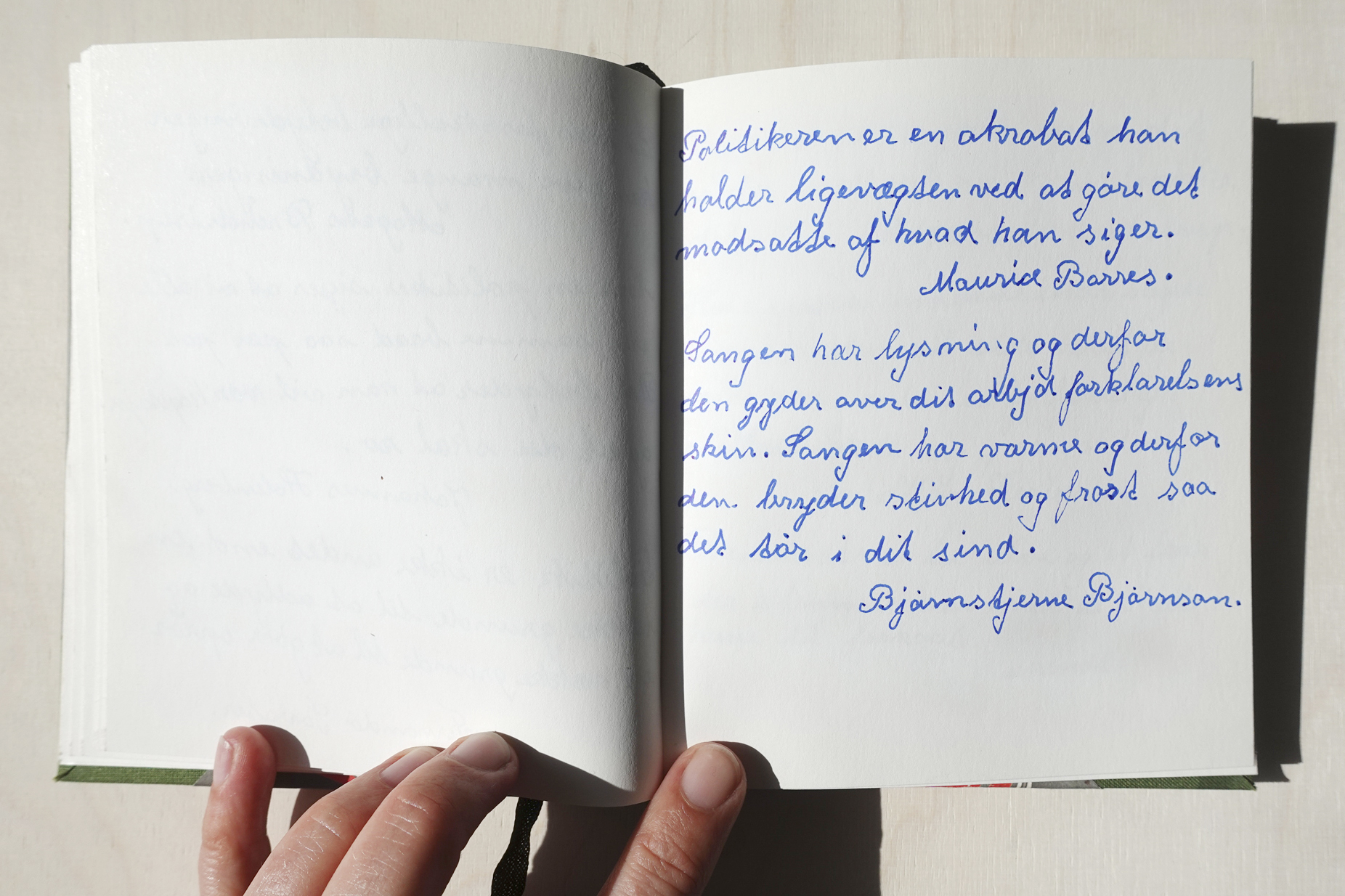
THE TIME WALK
Performative walk16th of July, 2021
Part of the project WALKING LANDSCAPES
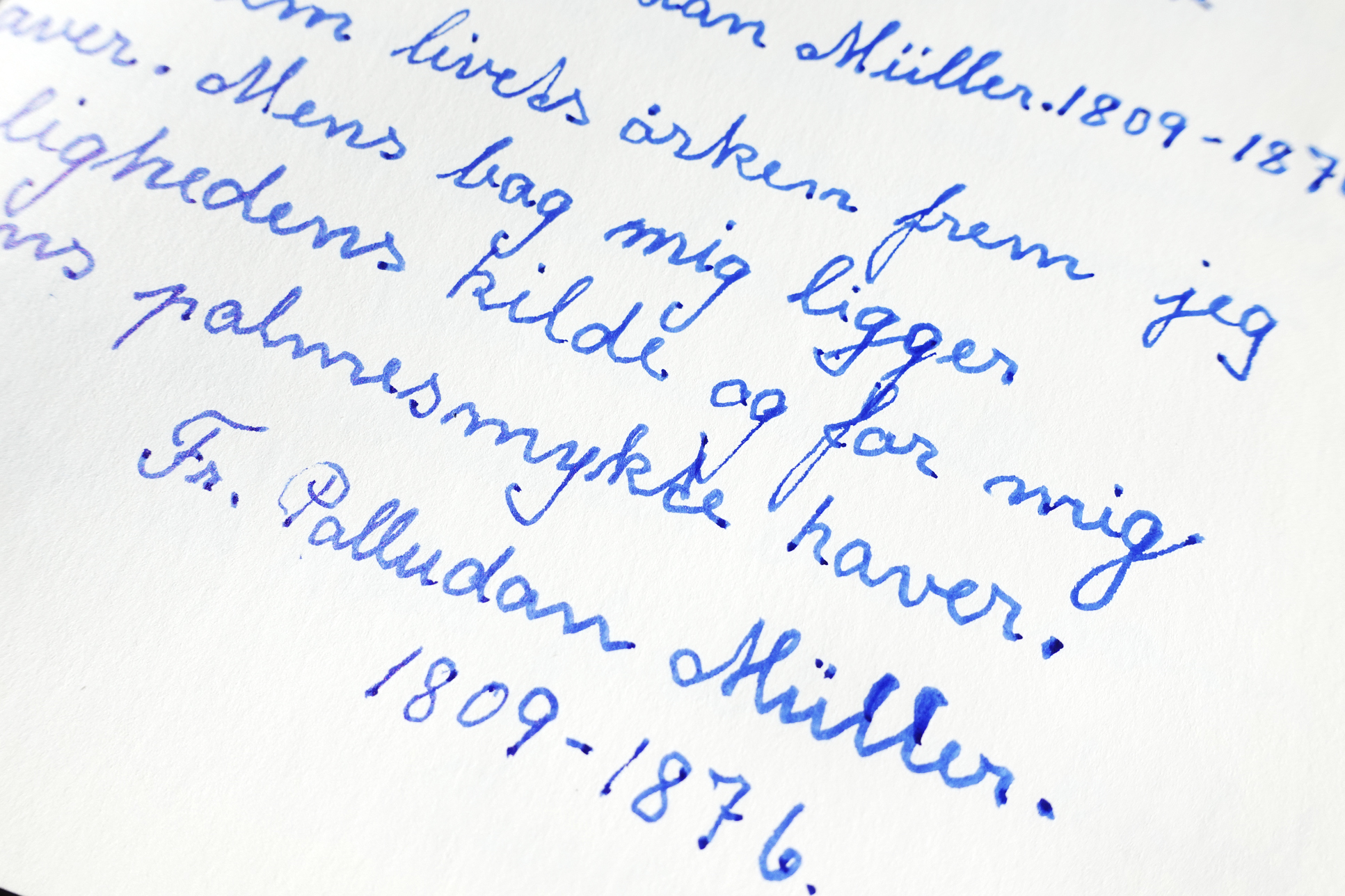
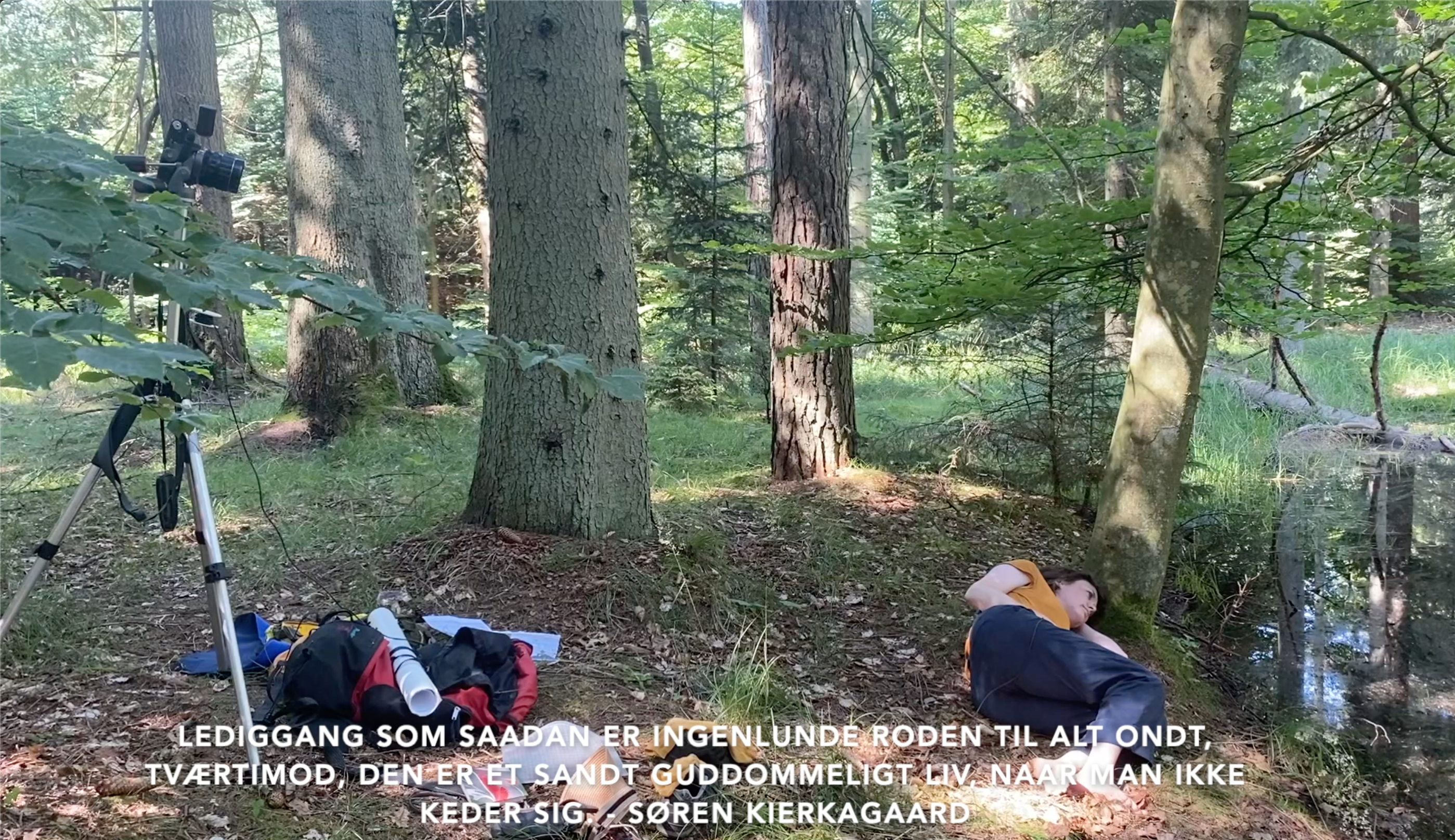
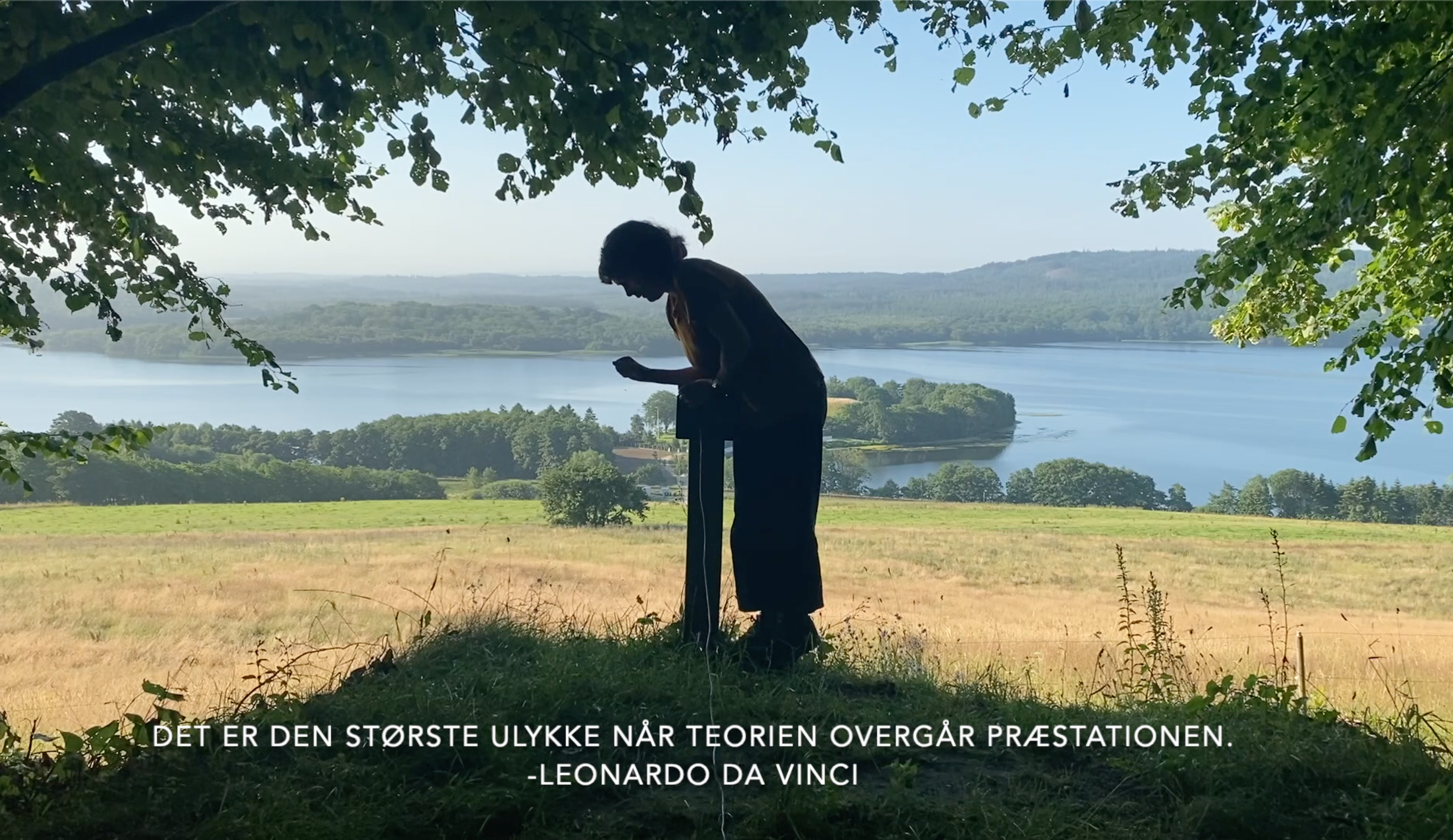
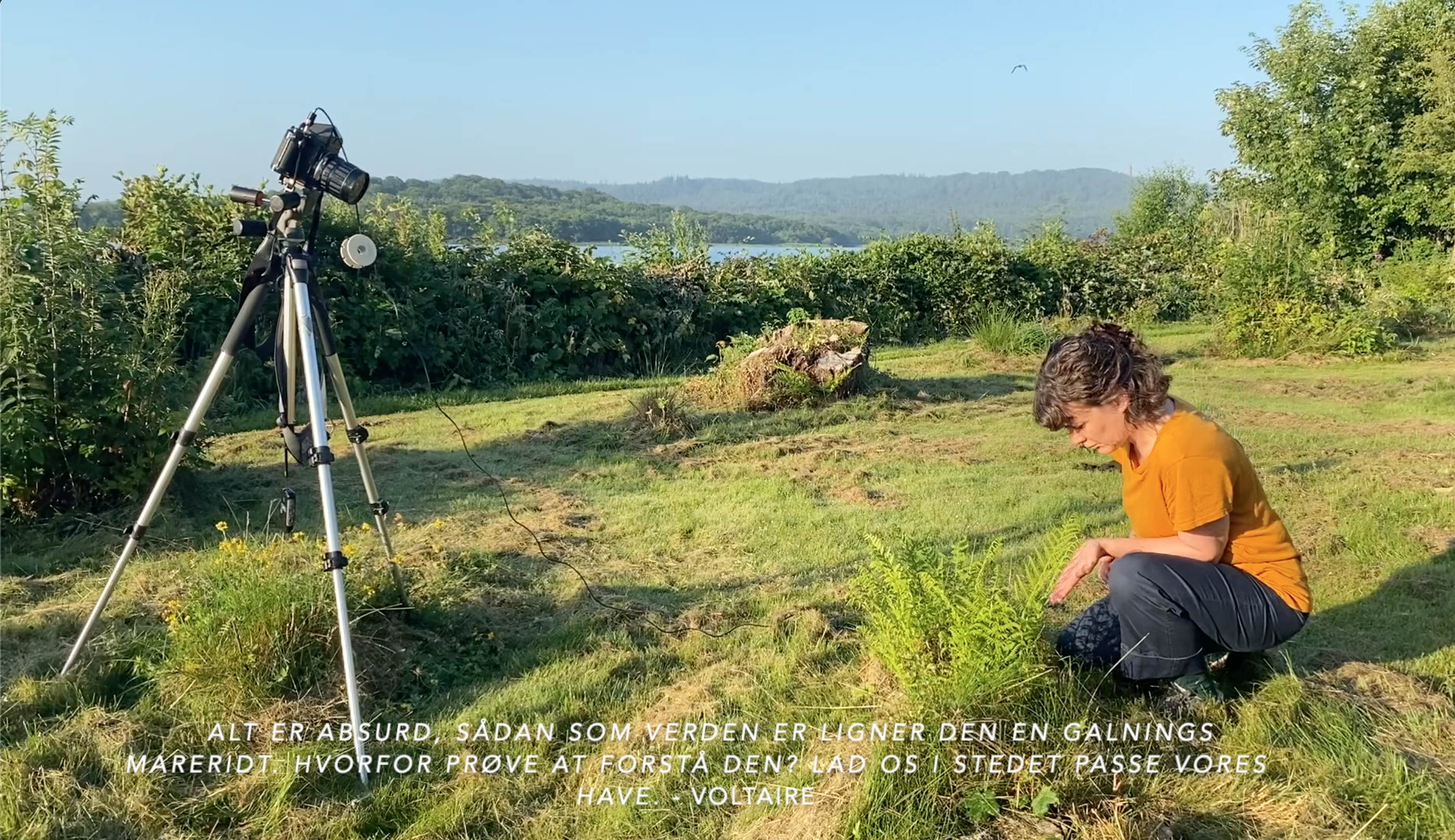
On Friday the 16th of July I departed from my grandparent’s old house in Laven and went for a 12-hour long walk with my granddad’s quote-book and my camera. Every hour I read a quote from the book and with that in mind made an interaction with the landscape to create a photographic image. I could be followed live every hour on ‘Walking Landscapes’ Facebook page.
An edited version of the walk can be seen here: Time Walk
An edited version of the walk can be seen here: Time Walk
WALKING LANDSCAPES is an artistic walking project by METROPOLIS - Art and Performance in Public Space. Over the course of 140 days, 140 artists undertook 140 twelve-hour walks through vastly different landscapes across the 12 participating municipalities.
All of the artists have a special connection to and knowledge of the landscapes they walk through. With this knowledge in their backpacks, they take us to hidden and forgotten places on a journey into the nature, myths, atmospheres, phenomena, and secrets of the landscapes.
They explore these places through their individual artistic disciplines — performance, visual art, dance, storytelling, architecture, film, music, etc. — using the surroundings both as setting and substance for the artistic actions they create along the way: stories, performances, installations, conversations, paintings, compositions…
All of the artists have a special connection to and knowledge of the landscapes they walk through. With this knowledge in their backpacks, they take us to hidden and forgotten places on a journey into the nature, myths, atmospheres, phenomena, and secrets of the landscapes.
They explore these places through their individual artistic disciplines — performance, visual art, dance, storytelling, architecture, film, music, etc. — using the surroundings both as setting and substance for the artistic actions they create along the way: stories, performances, installations, conversations, paintings, compositions…
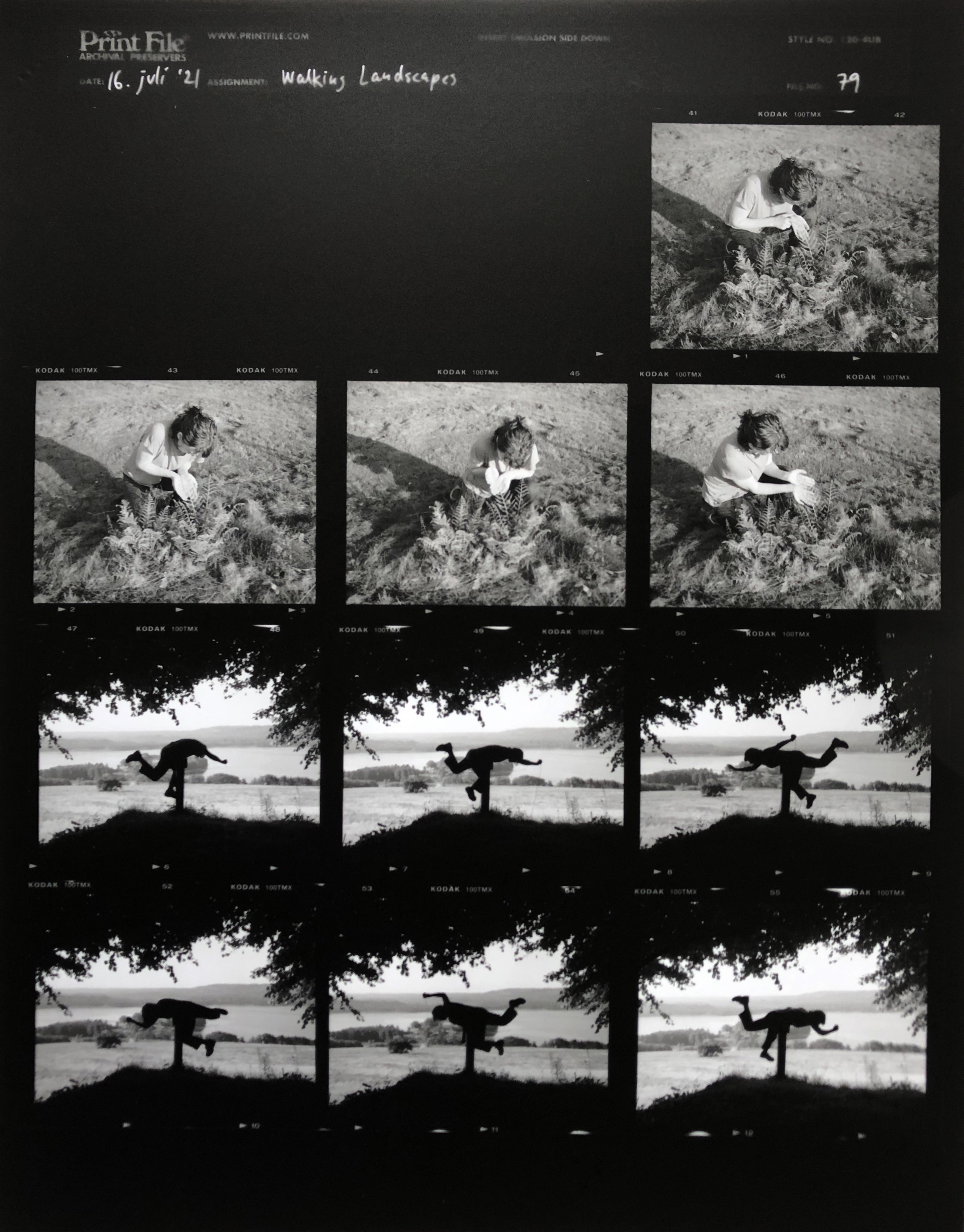

My granddad was one of my favourite people and one of the most intelligent human beings I have known. He never had a formal education and through his life, he worked as a milk man, a pig farmer and a sweeping man. When I knew him, he was retired and often sat in his chair reading Kierkegaard, Platon or other philosophical writers. He collected quotes and shortly before he died, he returned to me a notebook I had made for him, with all the quotes he had collected on small scraps of paper over the years. Besides reading my granddad went for a daily walk around the small town where he and my grandmother lived, and he reckoned, like the philosophers, he was reading, that walking was good for both body and mind.
About the walk
by art historian Iben From
Art Centre Silkeborg Bad
(in Danish)
Extract from text about all the Silkeborg walks: Walking Landscapes Silkeborg
The Landscape as a Key to Identity and History
Visual artist Lotte Christensen conveyed the landscape of the area west of the railway town of Laven. She highlighted its defining characteristics through carefully composed visual perspectives, which also opened up for excursions into cultural and art history, as well as presentations of earlier philosophers’ reflections on nature. In this way, she drew attention to the existential and cultural-historical dimensions embedded in the landscape—particularly in how humans have understood and continue to understand landscape and nature.
She also pointed to her own artistic work as a constructed representation, and to an art-historical dimension by using a clearly repetitive photographic process to demonstrate how depicting a landscape is always a deliberate arrangement. At the same time, she wove an element of her own family history into the work, further emphasizing that nature endures beyond all else, while the individual human being—or any given era—is merely passing.

BLANK PAGES
Performative actions / photographs
2018
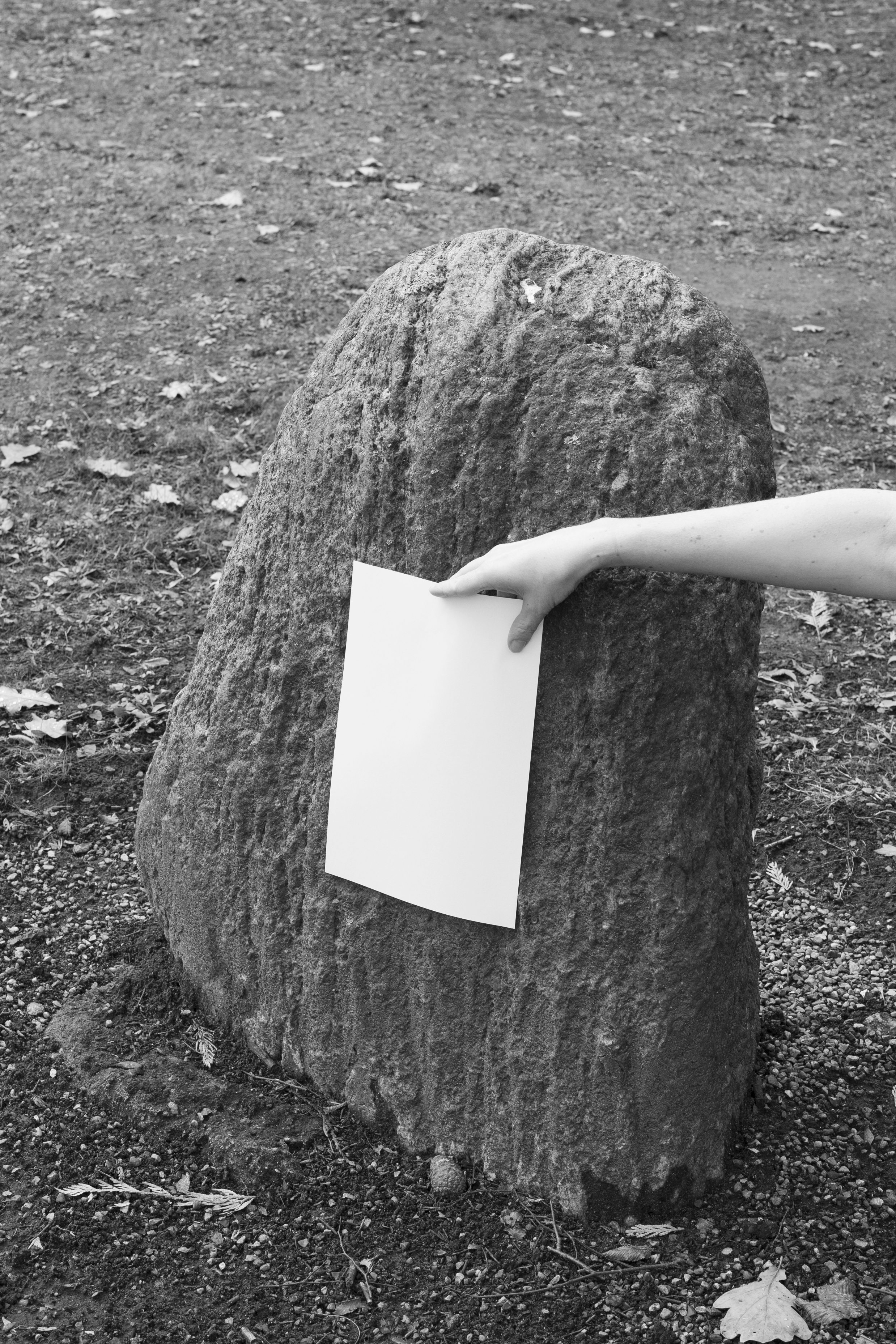
Stillness, emptiness, silence: in the excess of today’s society of imagery, the pause, the gap, the nothing between things is increasingly important.
Martina Weinhart in Seeing Nothing – Experiences of Radical Reduction in Image and Space since the 1960s
Martina Weinhart in Seeing Nothing – Experiences of Radical Reduction in Image and Space since the 1960s
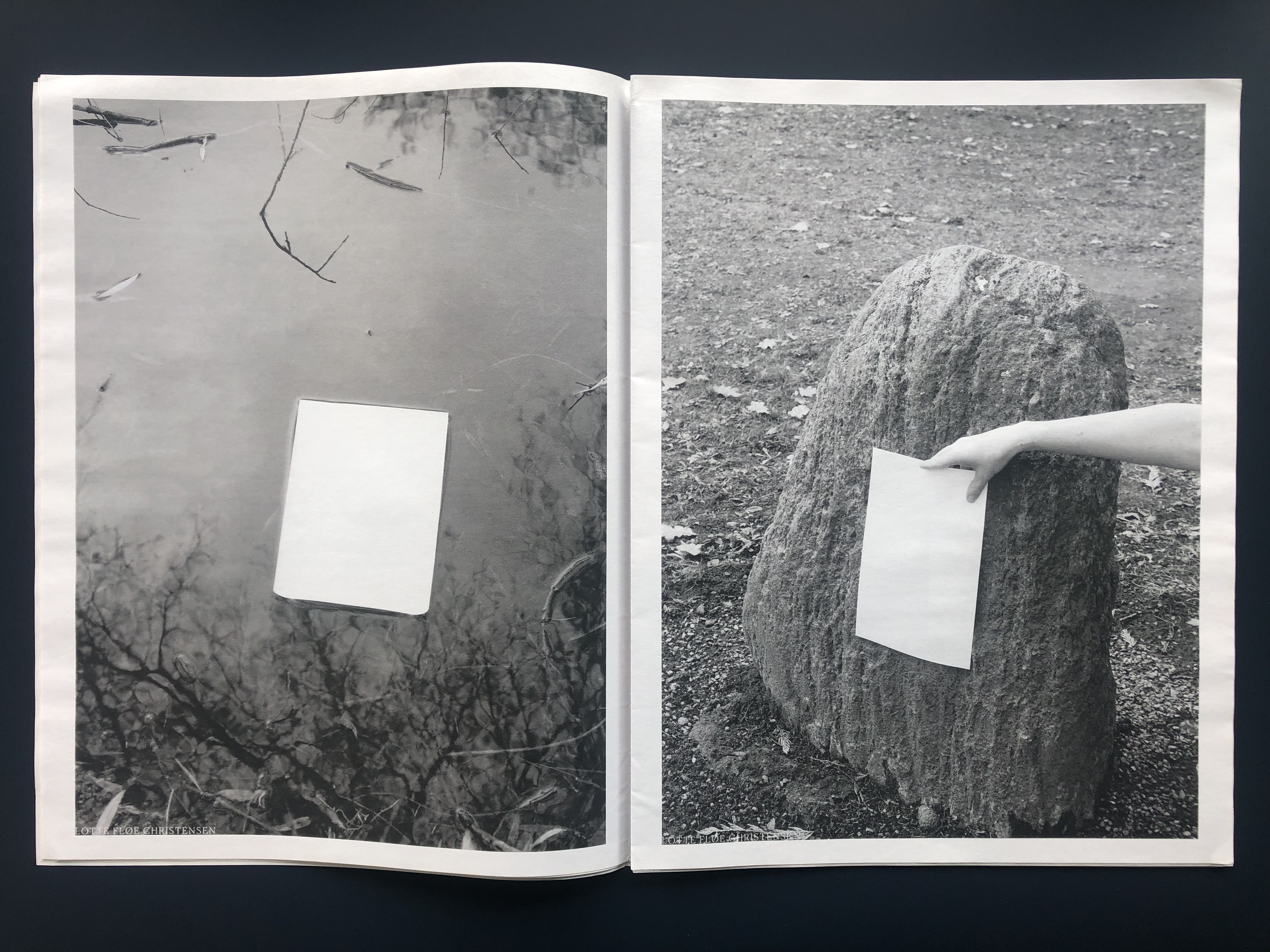 Paper vol. 02, Valentine Editions, Bristol, UK, 2021
One might posit that these ’blank’ pages (I prefer the word ’blank’ to ’empty’ to describe them) have a relationship to Heideggerian ’danger’ – the risk that we might be unwilling to acknowledge that blankness is a claim made on us.
Aron Vinegar in Ed Ruscha, Heidegger and Deadpan Photography i Photography after Conceptual Art
![]() Screenshot from the online exhibition Paper by Valentine Editions
Screenshot from the online exhibition Paper by Valentine Editions
Aron Vinegar in Ed Ruscha, Heidegger and Deadpan Photography i Photography after Conceptual Art
 Screenshot from the online exhibition Paper by Valentine Editions